
Feast of the Nativity of the Blessed Virgin Mary
The Littleness of Mary, the Greatness of God
Liturgical Cycle: C | Lectionary Cycle: I
Introduction
The Bible, including today’s readings, sees Mary in the function of her Son; nothing more is said about her in the Gospel than what illustrates and serves Christ’s mission. Her inconspicuous and self-effacing service is very telling about her character and role – and at the same time about our mission: to witness quietly to the pre-eminence of Christ, to serve him, to be open to his salvation, to live for others.
Opening Prayer
Lord our God,
we thank you today for giving us Mary
as the Mother of your Son.
In her you show us how strong your grace is
and how surprisingly near you are to people.
Give us a firm faith
in the great things you do for all of us
and help us to respond to your gifts
with joyful and receptive hearts.
We ask you this through Christ our Lord.
Responsorial Psalm
R. (Isaiah 61:10) With delight I rejoice in the Lord.
Though I trusted in your mercy,
let my heart rejoice in your salvation.
R. With delight I rejoice in the Lord.
Let me sing of the LORD, "He has been good to me."
R. With delight I rejoice in the Lord.
Alleluia Verse
R. Alleluia, alleluia.
Blessed are you, holy Virgin Mary, deserving of all praise;
from you rose the sun of justice, Christ our God.
R. Alleluia, alleluia.
Prayers of the Faithful
- For the world with all its needs, that Mary may watch over it and pray for it, keep people from warring with one another and from making one another suffer, we pray:
- For people in lowly jobs, that they may learn from our humble mother that God values all work done with love and care, we pray:
- For all of us united here, that our faith in Jesus Christ may produce in us, as in Mary, fruits of genuine love for one another, we pray:
Prayer over the Gifts
Lord God, you satisfy the hungry
with the bread of life
and you quench the thirsty
with the abundance of your Son's wine.
May these gifts be the signs
that we too are willing to share the riches
of your salvation and of the good things of life
with those who hunger and thirst
for bread, justice and love.
May all people thus know
that you are attentive to our needs,
through Christ our Lord.
Prayer after Communion
Lord our God,
however weak and wavering
our faith may be,
We believe and we pray
that you may supply us
with the strength we lack.
Do in us and through us
The great things you wish to accomplish.
Like Mary, may we serve your Son,
Jesus Christ, our Lord forever.
Blessing
No wonder that we are so attached to Mary. She gave us Jesus, stood by him all her life, and at his death became our mother too. May we too stand by Jesus' side in all our life and death, and may God bless you, the Father, and the Son, and the Holy Spirit.
Matthew 1:1-16, 18-23
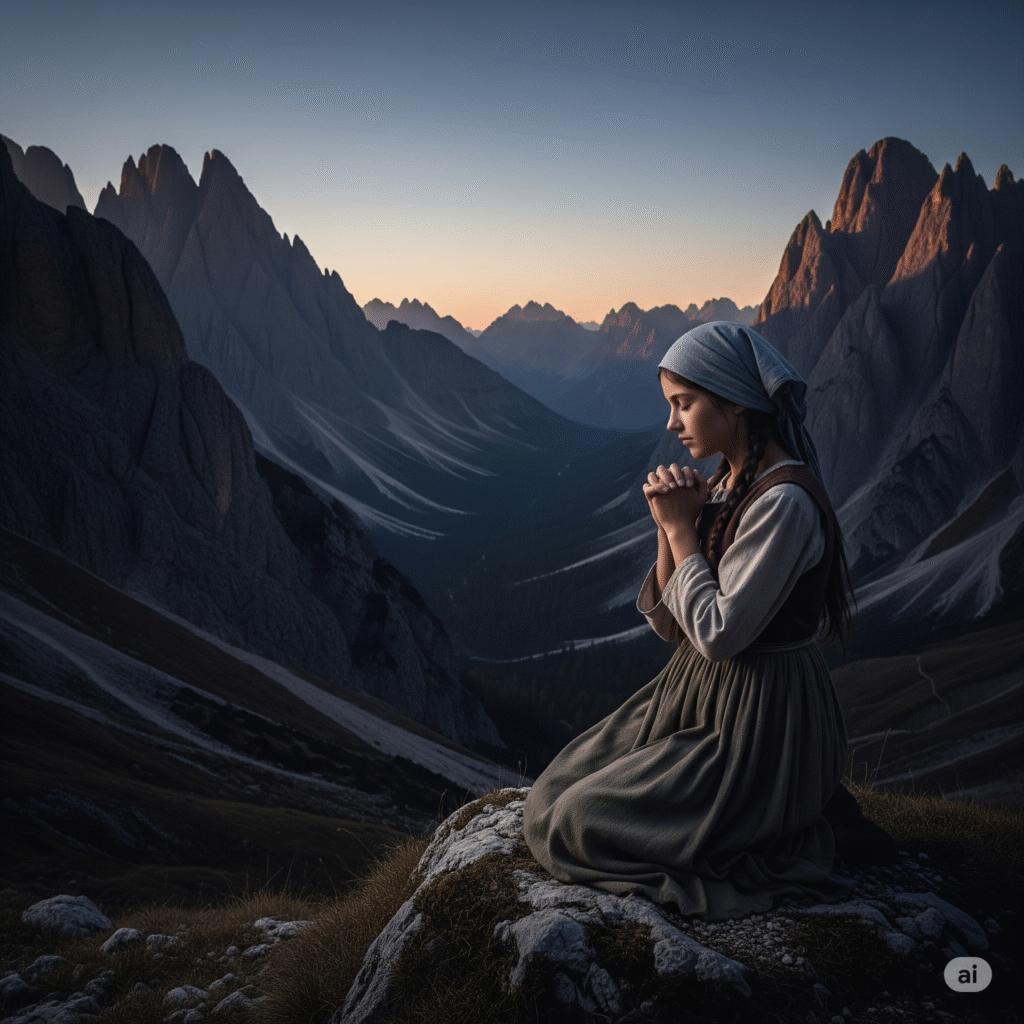
Today we celebrate the Nativity of the Blessed Virgin Mary. The Church invites us to rejoice at the birth of the one through whom God’s dream of salvation began to take flesh. In Mary’s birth, something so small, so hidden, becomes the doorway to something vast and beautiful. This is God’s way: everything begins in littleness.
The Prophet Micah reminds us: “But you, Bethlehem Ephrathah, who are little among the clans of Judah, from you shall come forth for me one who is to be ruler in Israel.” God chooses what is little, humble, and hidden to do great works. From the small village of Bethlehem comes the Savior. From the small, pure life of Mary comes the Prince of Peace. In her littleness, God opens a horizon of reconciliation and unity for the world.
Mary’s birth is not accompanied by great spectacles or signs. She is born quietly, into an ordinary family. And yet, in her, God’s dream takes root. She will say “yes” to God, and through her, Jesus, the reconciler of all, will enter the world. This is how God works: not with noise or power, not with worldly greatness, but in humility, simplicity, and patience.
The Gospel gives us a long genealogy—names upon names, a journey through saints and sinners, heroes and failures. It may seem monotonous, but it tells us something important: God walks with His people. He does not save us with a magic wand. He journeys through history, through generations, through human weakness and sin, until the birth of Mary prepares the way for Jesus. God is not afraid of our faults; He enters into them. He is close, and He never abandons His people.
On this feast, we also learn that God reconciles and makes peace not in great assemblies or documents, but in the small steps of everyday life. Peace begins in the little things: in a gesture of forgiveness, in a word of kindness, in listening patiently, in welcoming the one who is different. Mary shows us this way: her littleness becomes the space where God’s peace takes flesh.
There is another gift in today’s celebration: hope. Mary’s birth is the dawn of salvation. It is the sign that God has not forgotten His people, that His promises are true. Like Joseph in the Gospel, who dreams of God’s plan, we too are invited to dream. And even more: God Himself dreams. He dreams of a reconciled humanity, a family where no one is excluded, a people who walk together in peace. Mary’s birth is the first light of this dream fulfilled.
Brothers and sisters, as we celebrate the Nativity of Mary, let us ask for the grace of unity and peace. Let us learn from her littleness to walk with God, step by step, in humility. Let us not be afraid of small beginnings, of hidden acts of love. In the Eucharist, too, everything is hidden in littleness: a small piece of bread, a little wine—yet there is the whole dream of God, His love, His peace, His Son.
In Mary’s birth, we see God’s great horizon opening before us: peace through littleness, reconciliation through walking together, and hope that never fails.